




Pre-sowing seed treatment for winter crops as a tool for managing moisture and germination energy: protection against provocative rainfall and the formation of uniform emergence
Sowing winter cereals lays the foundation for the coming harvest, and one of the most important steps in that foundation is pre-sowing seed treatment. Seed treatment is traditionally associated mainly with protection against a range of pathogens — fungal and bacterial pathogens and pests spread through seed stock and soil. But modern seed-treatment products, especially when combined with biological components and micronutrients, perform a far broader range of functions that directly affect germination physiology and seedling resilience to unfavourable abiotic factors. A key aspect of such treatment is managing the seed’s water regime in the soil and protecting it against so-called “provocative” moisture.
Germination energy and field emergence: the physiological foundation of the harvest
Germination energy and laboratory germination rates, measured under optimal conditions, don’t always match real field emergence. Under field conditions, the seed faces a whole set of stress factors: moisture shortage, sharp temperature swings, mechanical resistance from soil crusting, and attack from soil-borne pathogens. Stand density depends not only on the sowing rate applied but also on the seeds’ actual germination rate and germination energy. The higher these indicators, the more plants will establish per unit area, and the sooner they’ll reach the tillering stage.
Combining seed treatments with biological products and micronutrient fertilisers has a positive effect on germination energy and germination rate in agricultural practice. This comes partly from stimulating root development and physiological processes in the seed and seedling, and partly from reducing seed infection thanks to the treatment product, especially under field conditions. Research shows that combined treatments can raise winter barley seed germination to as high as 94%, while also boosting germination energy and seedling vigour.
Provocative moisture: a hidden threat to winter sowing
The term “provocative moisture” describes a situation in which seed sown into the soil receives a small amount of rainfall — enough to trigger germination, but not enough to complete it and establish the seedling’s root system. The seed swells and begins to grow, but without a further supply of moisture, it slides into osmotic stress. As a result, the seedling either dies from desiccation or ends up weakened and unable to build a strong root system — critically reducing its chances of overwintering successfully and being productive later on.
This problem is especially acute in regions with unstable autumn rainfall, where light showers are followed by extended dry spells. Winter sowing is increasingly accompanied by significant moisture deficits and high air temperatures, which makes a seed-preparation strategy built on effective protective-stimulant treatments a decisive factor.
The protection mechanism: forming a semi-permeable coating
One of the most effective technological solutions for protecting seed from provocative moisture is applying special polymer or paraffin-wax coatings, found in modern seed-treatment formulations, to the seed surface. This coating acts as a water-regime regulator: rather than fully blocking water from reaching the seed, it restricts and doses it, preventing premature swelling and germination when soil moisture is insufficient.
A product applied to seed forms a protective coating that can shield the seed in the soil from provocative moisture and other unfavourable conditions for up to two months, while preserving the seed lot’s germination rate and germination energy. Research on hydrophobic paraffin-wax-based coatings shows similar results: such a coating protects seed from moisture loss, regulates the timing of germination, helps preserve accumulated nutrient reserves, boosts plant growth and development, and ultimately raises grain yield.
When favourable conditions arrive — sufficient, stable rainfall wetting the seed bed — the protective coating gradually breaks down or becomes permeable, and the seed receives the signal for uniform, synchronised germination. This way, the plant avoids the “trap” of provocative moisture and starts growing at the optimal moment, when its chances of survival and of forming a strong seedling are at their highest.
Foliart Riza: an integrated approach to pre-sowing treatment
Foliart Riza was developed specifically to implement a strategy of protecting seed from provocative moisture and stimulating germination energy. Unlike traditional seed-treatment products aimed solely at fungicidal or insecticidal protection, Foliart Riza is a multifunctional complex that addresses several tasks at once.
Key functions of the product:
Forming a protective coating. Applied to seed, the product creates a thin polymer film that regulates the flow of moisture to the embryo. With light rainfall, the coating restricts water penetration, preventing the seed from chitting and subsequently drying out. When abundant rainfall arrives, providing stable moisture, the film becomes permeable, and the seed receives the signal for uniform germination.
Raising germination energy. The physiologically active components in the product’s formulation stimulate metabolic processes in the embryo, activate the synthesis of hydrolytic enzymes that break down endosperm storage reserves, and speed up radicle and shoot formation. This delivers not only a higher germination rate, but faster, more uniform emergence.
Adaptogenic and anti-stress action. The product helps raise seedling resilience to unfavourable environmental factors — temperature swings, moisture deficit, mechanical soil resistance. Treated plants build a stronger root system and are better prepared for overwintering.
Application technology
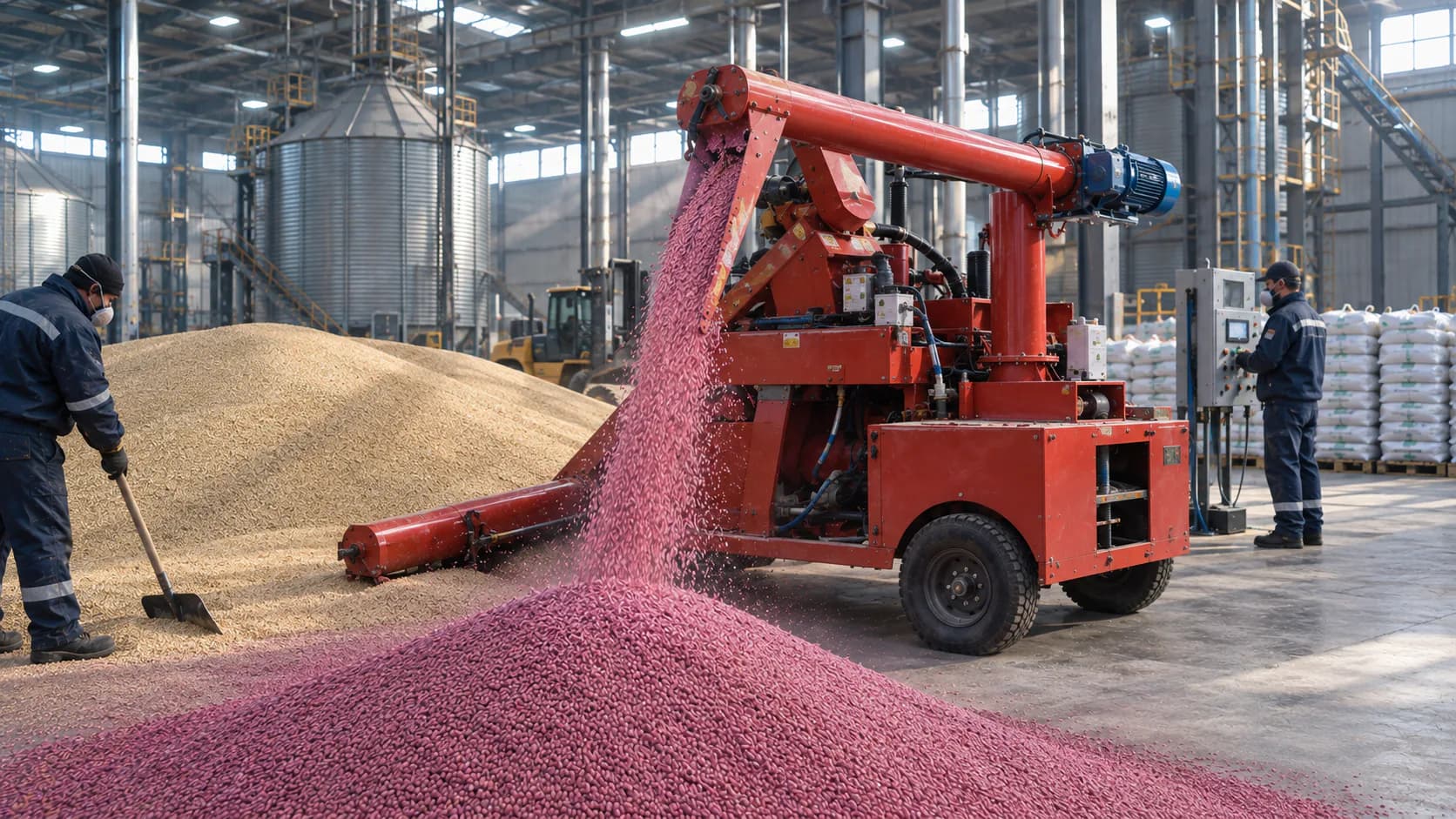
Foliart Riza is applied to seed well ahead of sowing, or immediately before it, using standard seed-treatment equipment. It’s important to ensure even coverage of the entire seed surface, which guarantees the protective coating works reliably.
This treatment is especially relevant in the following situations:
Sowing under unstable moisture conditions or a forecast rainfall deficit.
Using seed lots with reduced germination energy or germination rate.
Early sowing dates, when the risk of a return to dry conditions is highest.
Conclusion
Pre-sowing treatment of winter crop seed with Foliart Riza isn’t just protection against pathogens — it’s comprehensive management of the plant’s starting conditions. The regulated protective coating formed on the seed surface prevents premature germination triggered by provocative moisture and keeps the seed viable until favourable conditions arrive. The product’s germination-energy stimulation and adaptogenic properties deliver uniform, even emergence with a strong root system — laying the foundation for successful overwintering and a strong winter cereal harvest.