



Levelling the stand and anti-stress therapy at the first true-leaf stage
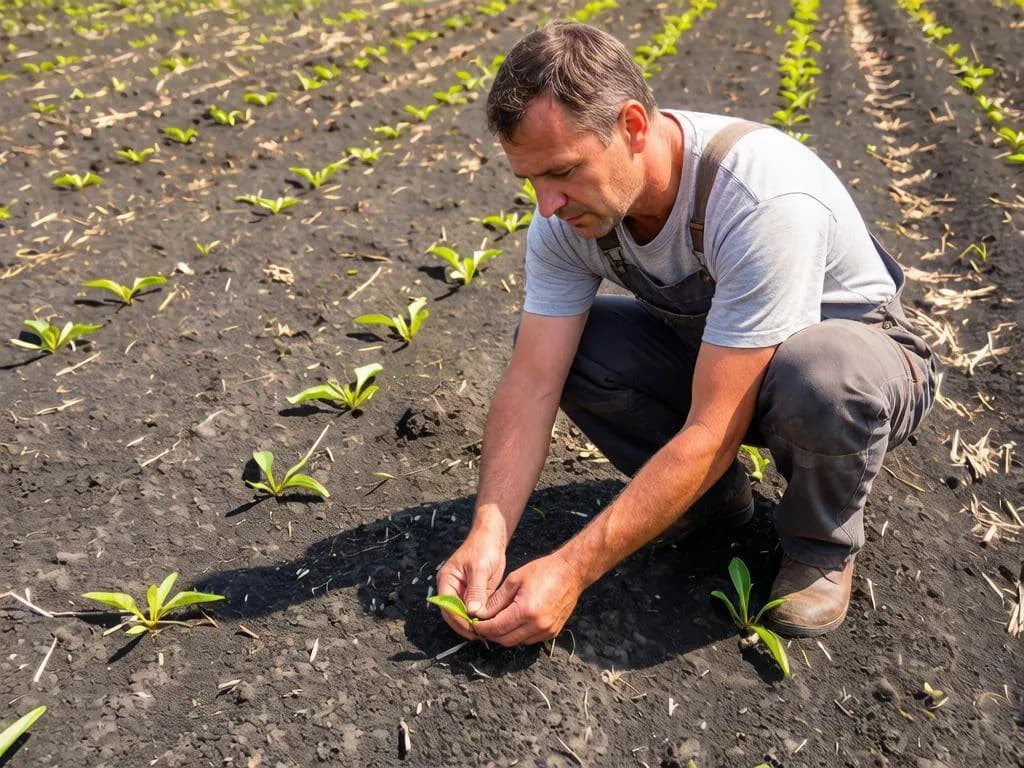
The early growth stage of field crops is a critical period that goes a long way toward determining the final productivity of the stand. Seedlings, even from high-quality seed, often show marked heterogeneity — uneven height, uneven root development, and uneven rates of leaf-area expansion. This stems from micro-scale variation in soil conditions, uneven seed placement depth, and fluctuations in temperature and moisture near the soil surface. Early foliar feeding at the first true-leaf stage is designed to level out these differences and build a uniform, physiologically resilient stand.
The vulnerability of the juvenile stage: between heterotrophy and autotrophy
By the time the first true leaf appears, the plant is going through one of the most energetically demanding transitions of its life cycle — a switch in nutritional mode. Seed endosperm reserves (heterotrophic nutrition) are already exhausted or nearly so, while the root system is not yet developed enough for full mineral uptake from the soil solution. The photosynthetic apparatus, represented by the first true leaves, has only just begun functioning and cannot yet fully supply the plant with assimilates.
During this window, the plant is extremely sensitive to any external stressor:
• Temperature shock (a return frost, or conversely, overheating of the soil surface).
• Herbicide load (soil-applied or early post-emergence herbicides suppress enzyme systems).
• Osmotic stress (moisture deficit in the topsoil, or excessive fertiliser salt concentration).
The stress response at the juvenile stage shows up as arrested growth, cotyledon yellowing, and delayed unfolding of subsequent leaves. A 3–5 day setback at the start of the growing season is essentially never made up later, and correlates directly with yield losses — particularly in crops with a short growing season.
An early-intervention strategy: amino acids as an energy-saving tool
Foliar feeding at the 1–2 true-leaf stage pursues two related goals: levelling out the physiological status of the plants, and preventive stress protection.
The key component of such feeds is free, plant-derived amino acids (glycine, proline, glutamic acid, alanine). Their physiological role at the juvenile stage differs fundamentally from that of macronutrients. Applying Foliart VSG-30 during this window is well justified.
Bypassing energy-intensive metabolic pathways.
Synthesising the plant’s own amino acids from mineral nitrogen (nitrate or ammonium) is an extremely energy-intensive process, requiring ATP and reducing equivalents (NADPH) generated by photosynthesis. In a young plant with an underdeveloped leaf apparatus, photosynthesis is limited. Supplying exogenous amino acids via the leaf lets the plant bypass nitrate reduction and primary amination altogether, delivering ready-made “building blocks” for synthesising its own proteins, enzymes and chlorophyll. The energy freed up this way is redirected into growth processes — above all, root system development.
Osmoprotection and membrane stabilisation. A special role belongs to the amino acid proline — a universal osmoprotectant that accumulates in plant cells in response to water deficit, salinity or temperature stress. Applying proline exogenously creates a buffering pool in the cytoplasm that prevents protein denaturation and membrane degradation before the plant would otherwise have to launch its own energy-intensive synthesis of this compound. Glycine and glutamic acid are also chlorophyll precursors, boosting photosynthesis under conditions where it is otherwise limited.
Micronutrient chelation. Amino acids, particularly glycine and methionine, have strong complexing ability. Within a foliar feed, they act as natural chelating agents, easing the penetration of micronutrient cations (zinc, manganese, iron, copper) through the leaf cuticle and their transport through the apoplast. This is critically important at the juvenile stage, when micronutrient demand is high but root uptake is still limited.
Synergy with growth stimulants and mineral background
The effectiveness of amino-acid feeding rises sharply when combined with hormone-type substances and basic nutrients.
Growth stimulants (auxins, cytokinins, brassinosteroids). If amino acids supply the plant with “building material” and relieve stress, exogenous phytohormones set the direction for how those resources are used. Adding cytokinins (or their synthetic analogues) to the tank mix stimulates cell division in the apical meristem and, importantly, at lateral root growth points. Auxins drive cell elongation and formation of the vascular system. Amino acids and hormones therefore work in tandem: the former supply plastic material, the latter give the order for its immediate use in growth processes.
Nutrients (phosphorus, potassium, micronutrients). At the juvenile stage, the plant faces an acute phosphorus shortage — an element critical for energy metabolism (ATP synthesis). Because phosphate mobility in soil is extremely low, and the root system has not yet reached zones with adequate phosphorus content, a foliar feed of monopotassium phosphate or organophosphorus compounds combined with amino acids helps close this gap. Zinc and manganese are needed to activate photosynthesis and respiration enzymes; their availability early on directly affects the rate of biomass accumulation.
Conclusion
Feeding at the first true-leaf stage is not simply a matter of applying small doses of fertiliser. It is a technological practice grounded in a deep understanding of juvenile-stage stress physiology. A well-designed mix of amino acids, micronutrients and gentle growth stimulants levels out the stand, reduces herbicide-related setback, and lays the foundation for a highly productive crop. Cutting corners at this stage translates into irrecoverable losses of potential yield later on.
#Foliart #CropTechnology #StandUniformity #AntiStressTherapy #RowCrops #JuvenilePhase #AminoAcids #GrowthStimulants #Micronutrients #Yield