





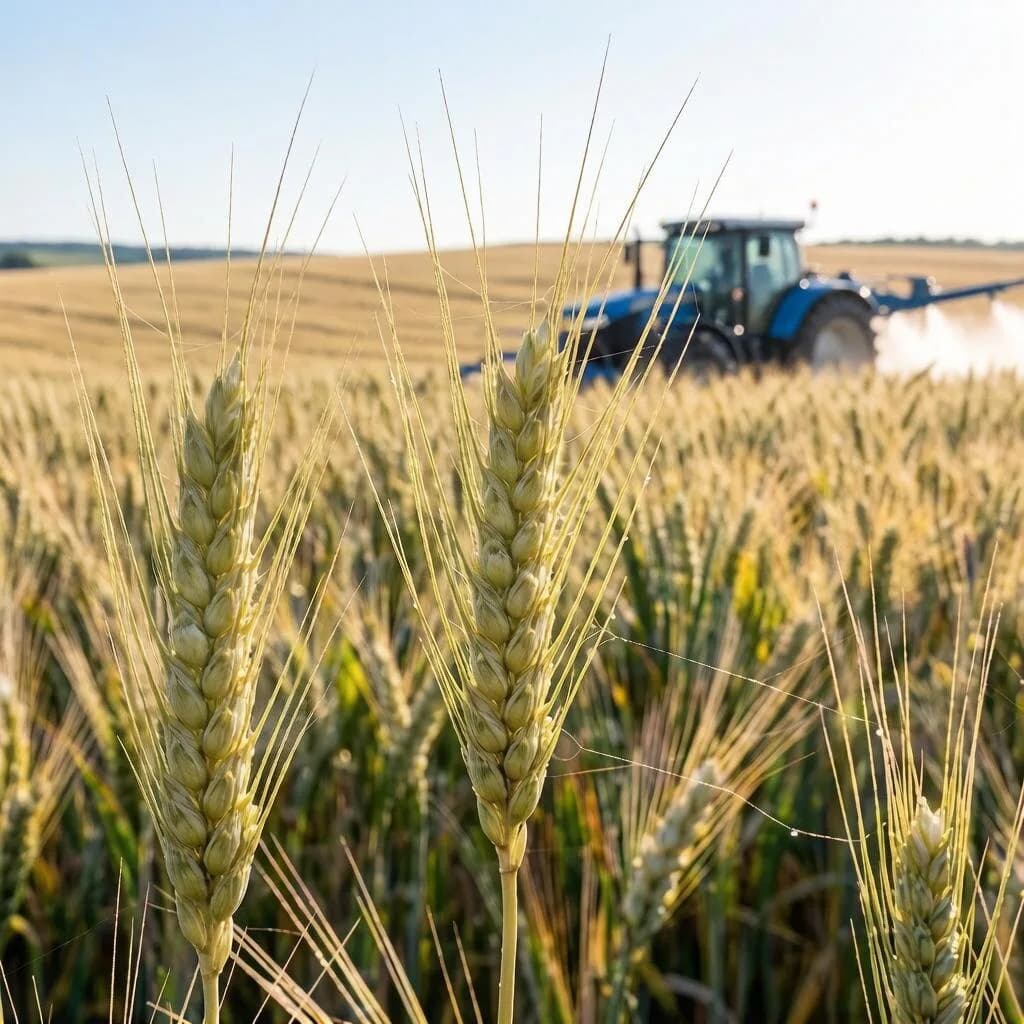
Heading in winter cereals: the last frontier for managing quality through sulphur and micronutrients
In the technological cycle of winter cereal production, the heading stage holds a special place. On one hand, the main stages of building the structural yield components — number of productive stems and spikelets per ear — are already complete. On the other hand, this is precisely when the parameters that shape not gross yield but grain quality are set: protein content, gluten quantity and quality, test weight. This is the agronomist’s last window to influence the grain’s internal chemical composition, and two components play the key role here — sulphur and a complex of micronutrients.
Physiological context: the plant’s changing priorities
Once the ear emerges from the flag-leaf sheath, the plant moves into the active grain-fill phase. The metabolic focus shifts from vegetative growth to intensive remobilisation — the transfer of previously stored assimilates from the leaves and stem into the developing grain. The period from heading to the dough stage lasts, depending on weather and genotype, 30 to 45 days — an extremely tight window for the biochemical conversion of the carbohydrate pool into full-fledged storage protein.
It is important for the agronomist to recognise that time before harvest is short. Any intervention in nutrition at this stage must be precise, fast-acting, and aimed not at stimulating new growth but at activating the enzyme systems responsible for synthesising and transporting plastic substances.
Sulphur at heading: closing the last window
Sulphur application in cereals is traditionally associated with early-spring feeding at tillering. There is, however, an important physiological case for applying sulphur late, specifically at heading.
Direct effect on storage protein synthesis. The sulphur-containing amino acids methionine and cysteine are essential components of the prolamins and glutelins that make up wheat’s gluten complex. If the plant faces a shortfall of reduced sulphur at grain fill, protein translation on the endosperm ribosomes is interrupted. As a result, the grain accumulates starch and non-protein nitrogen but fails to build quality gluten.
Offsetting low soil sulphur availability. In spring, mineralisation of soil organic matter proceeds slowly. Some of the sulphur applied earlier may have been leached by rainfall. Late foliar feeding makes up for a hidden deficit that shows no obvious chlorosis symptoms but significantly limits quality parameters.
Carry-over effect on flour processing quality. Research shows that raising sulphur concentration increases the proportion of high-molecular-weight glutenin subunits, which correlates directly with flour strength and bread loaf volume.
Heading is therefore the last technologically justified window for applying sulphur.
Micronutrients: catalysts for rapid conversion
While sulphur acts as a structural component, micronutrients function as metabolic catalysts. Without them, the mobilisation and conversion of assimilates proceeds too slowly.
Magnesium (Mg). The central atom of the chlorophyll molecule. Sustaining flag-leaf photosynthetic activity is essential to a continuous supply of carbohydrates to the grain. Magnesium also activates ATP synthesis enzymes.
Zinc (Zn). A component of carbonic anhydrase and alcohol dehydrogenase. Zinc is also required for tryptophan synthesis, which regulates assimilate transport into the ear.
Manganese (Mn). A key cofactor in the photolysis of water and an activator of Krebs cycle enzymes. Manganese supports the energy metabolism required for sugar transport.
Copper (Cu). Involved in lignin synthesis, providing mechanical strength to the stem and lodging resistance. It also helps protect grain from pathogens.
Boron (B). Drives sugar transport across cell membranes. During grain fill, boron is critical for the rapid movement of sucrose into the grain.
Late-feeding tactics: concentration and compatibility
Since the window is limited, feeding must be foliar and as effective as possible. Tank mixes are recommended, containing:
Magnesium sulphate (a source of both Mg and S) or specialised liquid fertilisers.
Chelated micronutrient complexes (Zn, Mn, Cu, B).
Amino acids (optional) to speed up element transport. A suitable option: Foliart Magnesium Aminochelate.
It is worth noting that fungicide applications often coincide with this stage. Adding a nutrition component to a fungicide tank mix is a rational approach — but the components must be checked for chemical compatibility to avoid phytotoxicity.
Conclusion
Feeding winter cereals at the heading stage is not an attempt to fix earlier mistakes — it is the final tuning of grain quality. Skipping this stage means losing the opportunity to realise the variety’s genetic potential in terms of quality parameters.
#Foliart #FoliartVSG30Ca #FoliartBorAmino