


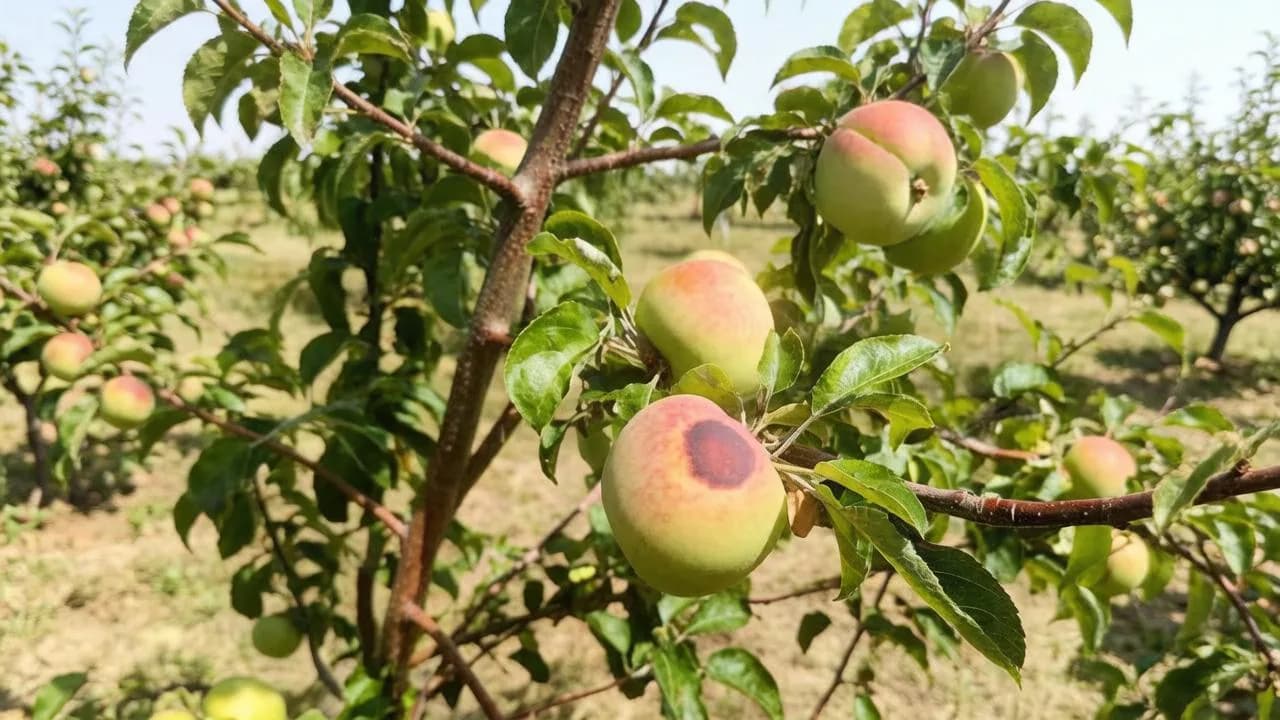
🌿 Perennial Crops. Protection Against Sunburn
☀ Sunburn in Perennial Crops: The Physiology of Heat Stress and Transpiration Management as a Key Protection Factor
Sunburn in fruit-bearing and ornamental perennial crops is a widespread physiological disorder that can result in significant economic losses. These losses are associated with reduced market quality of fruits, weakened plant vitality, and premature plant death.
In horticultural practice, traditional protective measures include whitewashing trunks and scaffold branches, wrapping them with light-colored materials, or using shading nets. However, these methods merely shield plants from solar radiation and do not address the underlying physiological mechanisms responsible for plant thermoregulation.
A modern approach involves managing the plant’s natural cooling system—transpiration—through the use of specialized anti-stress products such as Foliart Iliostop.
🔥 The Physics and Physiology of Overheating: Why Sunburn Occurs
Sunburn is a localized tissue injury caused by overheating under direct solar radiation. Plants absorb solar energy, which is converted into heat. When heat input exceeds the plant’s capacity to dissipate it, tissue temperatures rise to critical levels. This results in protein denaturation, destruction of cellular membranes, and oxidative stress.
Visually, sunburn appears as necrotic lesions on leaves and fruits. In woody crops, it may cause cracking and dieback of bark on trunks and scaffold branches, particularly on the southern and southwestern sides of the canopy.
The primary and most effective mechanism for dissipating excess heat is stomatal transpiration—the evaporation of water from the leaf surface. The physical principle is simple: when one gram of water evaporates from leaf tissues, approximately 583 calories (2,438 J) of thermal energy are removed. This is why the temperature of an actively transpiring leaf can be up to 7°C lower than that of a wilting leaf.
Under hot and dry conditions, plants may lose up to 0.5 kg of water per square meter of leaf area per hour through transpiration. This corresponds to the dissipation of approximately 350 W of thermal energy per square meter—nearly half of the total absorbed solar energy. Thus, transpiration performs a dual function: it ensures the upward transport of water and dissolved mineral nutrients while simultaneously serving as the plant’s thermoregulation system.
🚫 When Transpiration Can No Longer Cope
The ability of a plant to maintain effective transpiration is limited by several factors:
Water Deficit. When available moisture in the root zone becomes insufficient, plants are forced to close their stomata to conserve water, dramatically reducing the cooling effect. A vicious cycle develops: the higher the temperature, the more water evaporates, but without adequate water uptake from the soil, stomata close and overheating intensifies.
High Air Humidity. In greenhouses, conservatories, or during periods of prolonged rainfall followed by sudden sunshine, air humidity may become so high that the water vapor gradient between the leaf and the atmosphere decreases. As a result, transpiration slows down even when soil moisture is sufficient. Mass occurrences of sunburn are often observed under such conditions.
Phenological Factors. In early spring, perennial crops often experience intense sunlight before their root systems have fully resumed activity after winter dormancy. Under these circumstances, the transpiration stream is insufficient to cool plant tissues effectively, leading to typical spring sunburn injuries on bark and conifer needles.
Damage to the Conductive System. Mechanical injuries or infections caused by vascular pathogens can disrupt xylem integrity, restricting water transport to transpiring organs.
🛡 Iliostop: A Technology for Managing Thermotolerance
Traditional agronomic practices such as irrigation, mulching, and shading are aimed at creating favorable external conditions. However, these measures are not always practical on a commercial scale and do not directly enhance the plant’s own resistance to heat stress. A fundamentally different approach is offered by Iliostop.
The formulation of Foliart Iliostop provides a multifactorial mode of action.
⚙ Mechanisms of Action of Foliart Iliostop in the Context of Transpiration and Heat Resistance
1. Stabilization of Cell Membranes
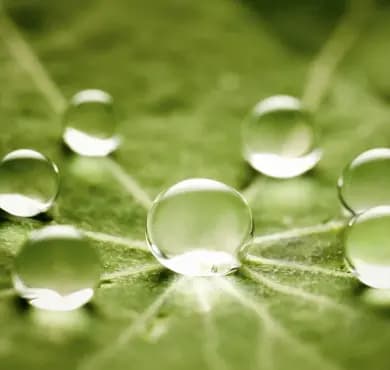
The product forms a thin polymer anti-transpirant film on the leaf surface. Unlike rigid films, Foliart Iliostop creates a semi-permeable layer. It does not completely block gas exchange but rather optimizes the transpiration flow, maintaining the cooling effect of evaporation while preventing critical tissue dehydration.
2. Prohormonal Regulation
A complex of prohormonal compounds stimulates the synthesis of endogenous phytohormones. This ensures a rapid response of the stomatal apparatus to changing environmental conditions, preventing both excessive water loss and critical overheating.
3. Osmotic Protection
Pectin contributes to moisture retention within the leaf apoplast, creating a buffering zone that slows mesophyll dehydration during periods of peak thermal stress.
Foliart Iliostop is compatible with most fertilizers and crop protection products. However, it must not be mixed in the same spray tank with copper- or sulfur-based products. A chemical compatibility test should always be conducted before application.
🏁 Conclusion
Sunburn in perennial crops is not an unavoidable consequence of hot weather but rather a manageable physiological process. The key factor in protection is maintaining efficient transpiration, which serves as the plant’s primary thermoregulation mechanism.
The application of Foliart Iliostop does not block transpiration; instead, it optimizes the process while simultaneously stabilizing cell membranes and activating hormonal adaptation mechanisms. This approach provides reliable protection against heat stress without compromising photosynthetic activity or the productivity of perennial plantations.
#Foliart #Iliostop #PlantProtection #SunburnProtection #AntiStress #Horticulture #Agrotechnology #HealthyGarden #Phytoprotection #PlantCare #StableYield #FoliartAgrochemicals